



Information on the first phase is presented in the article:
https://gsrsystem.com/nauchnye-issledovaniya/gsr-i-nauka-vazhnyj-shag-vperyod/
The second phase was devoted to objective changes in top
specialists as a result of many years of application of the GSR methodology.
The full text of the study can be downloaded here
IMPACT STUDY
REGULAR PRACTICE OF GSR ON
ELECTROPHYSIOLOGICAL INDICATORS
EMOTIONAL REACTIVITY
Purpose of the work
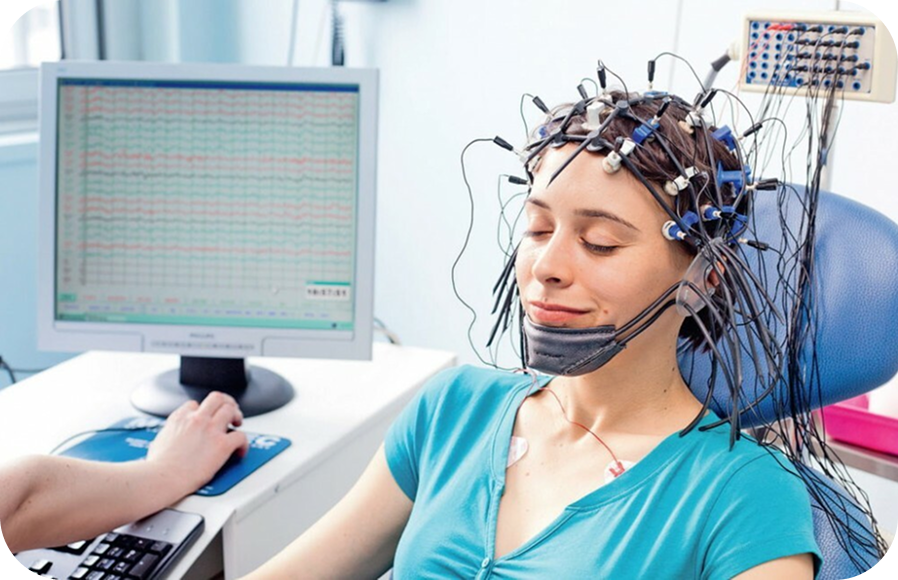
Assessing people’s emotional reactivity by analyzing the dynamics of key physiological parameters:
- heart rate;
- level of electrodermal reaction;
- breathing frequency;
- brain activity;
- heart rate variability.
The study was conducted among two groups of participants:
- People with more than 5 years of experience working with the GSR psychotherapeutic technique.
- People who have no experience in its use.
The results obtained demonstrate that regular practice of the GSR methodology is associated with the formation of stable psychophysiological mechanisms of adaptation and an increase in the subjective feeling of well-being.
GSR practitioners experience:
- greater resistance to negative stimuli;
- higher level of awareness;
- less prone to maladaptive strategies for coping with stress;
- faster adaptation to incoming information or switching attention;
- higher level of life satisfaction.
Conclusion:
The study confirms that long-term practice of psychophysiological self-regulation using the GSR method is associated, among other things, with with a more stable emotional background and reduced emotional reactivity. These effects can be traced both at the physiological (objective) and subjective levels. The obtained data can be used in the future to introduce the GSR training methodology into wellness programs and clinical practice for people with increased anxiety or post-traumatic disorders.
If you plan to publish this research in the media, distribute this information to a wider audience, or contact government agencies, please first coordinate this with the GSR administration.